Podcast Introduction (music playing): Welcome to Work Trends RU, presented by the Heldrich Center for Workforce Development at Rutgers, The State University of New Jersey. In each episode, we speak with experts, policymakers, and thought leaders about the issues affecting work, education, and the economy – exploring job market trends, economic challenges, and how innovations like AI are shaping the future of work.
Join us as we discuss the evolving landscape of work and education on Work Trends RU. (music ends)
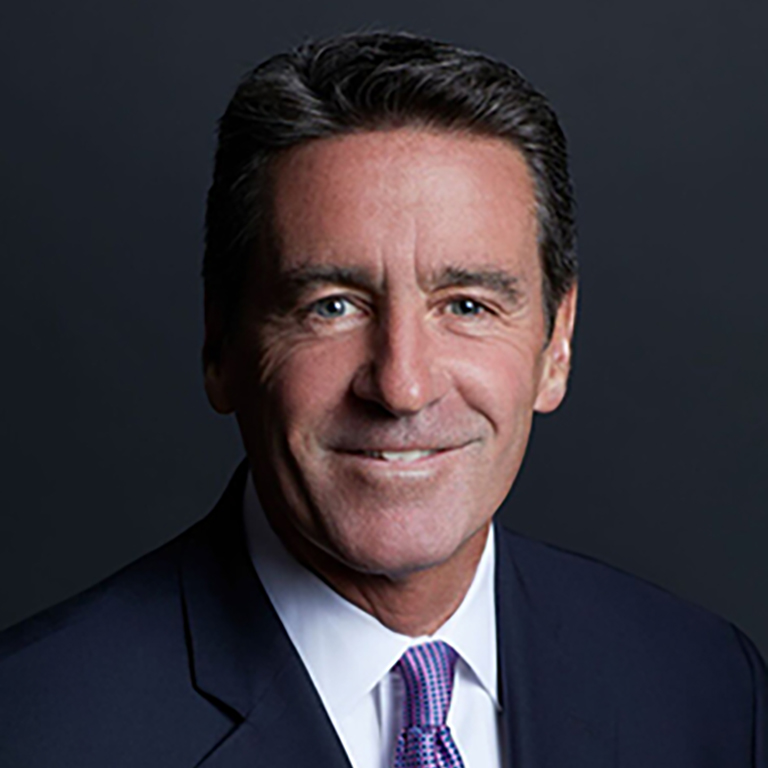
Carl Van Horn: Welcome to Work Trends RU. I’m Carl Van Horn and I’m the director of the Heldrich Center for Workforce Development and a professor at Rutgers University. Today, we’re very happy to have with us Steve Reynolds, who’s the president and CEO of the New Jersey Association of Independent Colleges and Universities, which is a statewide organization that develops strategies for the 13 private colleges and nonprofits in New Jersey. that enroll over 60,000 students. Many of our listeners may not know they range from the very large and famous Princeton University to somewhat smaller institutions such as Centenary. So, Steve, welcome to the podcast.
Steve Reynolds: Thanks, Carl. Pleasure to be here.
Carl Van Horn: You handle a wide range of issues at the association. So, what are the top two or three challenges that this sector is facing right now? Perhaps different than some, or the same as, other parts of higher education in our state and around the country.
Steve Reynolds: If permitted, let me address that by saying there are three top issues, 1A, 1B, 1C. It’s really hard to kind of move them in order because they’re also very important. But I’ll start with 1A. 1A is kind of an omnibus catch-all, which is the value proposition of IRED, which is establishing the ROI for parents and high school students when they make their choices to go to college and to go to a four-year and to go to a four-year in New Jersey and to go to a four-year among the 13 private institutions. We call it “independent” because that’s what independent colleges in the country call themselves that because they don’t want to be confused with private, which suggests a sense of, at least in their view, elitism and or exclusivity, which I don’t think matters so much. I just think we are private. We are independent. But what we have as far to do is we have to make sure, as all institutions in the state and the country do, is we got to basically demonstrate, and this relates directly, obviously, to workforce development, that there are jobs at the end of the rainbow here. That students will be able to pay off their debt, if they have any, in an adequate period of time that makes a clear return on investment. So, we’ve got to sell the concept of there is a extreme benefit of sending your child or yourself going to a four-year institution, public and/or private, because of the value that provides over not the four years that you’re there, but 40 years beyond in your career. And, obviously, the data shows that. Somehow there’s been a popular in media and in politics, the line of you really don’t need to go to a four-year college so much. It’s true that a substantial portion of our high school students may not need a four-year degree depending upon what their aspirations are. But what I worry about, Carl, is that message is being drummed so heavily, that it kind of creates a ladder and asks folks to consider stopping too early. We’ve got to encourage them.
For example, we partner very well with the community colleges. They are vital and they are partners. That’s just with us, but obviously the publics. So, we have programs that kind of encourage ascension up that ladder to four year and advanced degrees and I think that’s important, but we have to establish the value proposition to make sure that everybody understands it’s worth the time and cost based on the long-term benefit.
So, 1B is very important in my view, and it’s one of the reasons I took this job. It’s protecting student mental health. Right now, you’ve all seen it, read about it. There are great anxieties and tensions, have been for the last 10 to 15 years. There have been tragedies on our campuses annually and across the country. So, a challenge that is not unique to us, but to some of our schools that are higher stressed than others, to make sure that our students have the resources and that they can take advantage of those resources so that they get through the four year plus college path without having to take time off or other tragic circumstances. And I think our schools have done a great job. So has our public counterparts or colleagues.
The third is one we’re all struggling with, which is making sure that our schools are focused on AI preparedness. And that is when you talk about what the workforce is going to be in the future, how do we best prepare? Are we looking at our curriculum? Are we identifying courses that may not, at the end of the day, result in a clear work opportunity path? Every public and private institution in this country are trying to wrestle with “should we change the way we teach? Should we change what we teach? How do we connect with businesses to make sure we’re not teaching irrelevant information in an irrelevant way?”.
So, those are the three things, that I think are the biggest challenge. Now, again, they’re not exclusive to us. In some areas, they are. Mental health, for example, because we’re smaller schools. And we have schools like Princeton and Stevens where there’s a lot of stress. But those schools have their own different challenges, but we work well, I think, with the schools in making sure that they recognize the value of those resources, so. There are many more, but they’re all related. Everything goes to the value proposition, as well. Our unique challenge, though, is historical, right? We don’t necessarily get the kind of support financially from the state or federal government. And, in the latter case, we’re getting less and less. We’re getting more challenges, particularly a school like Princeton, Stevens, et cetera.
The endowment tax that’s coming, all these other challenges that are going to provide greater financial stress on our institutions are magnified by what’s going on in Washington. And we generally, we really get very hardly any operating aid from the state of New Jersey. We do benefit tremendously, as all of our schools in the state do, from the Tuition Assistant Grant program, the scholarships. New Jersey is very, very generous and unique in this country through what it provides. But we still are, if you will, kind of like stepchildren in many respects in the state of New Jersey and that I think people think we’re all rich because we’re private. We’re not. That our struggles, we can just deal with it by raising tuition. Can’t do it anymore. So, we have to do a better job. We, this association, better job conveying the message that we’re out here, some of our schools are struggling. And it’ll get a little worse because we’re walking into the demographic cliff where there’s going to just be fewer kids to come out of high school in the state of New Jersey.
So, those are the major issues. That’s a lot I threw at you there.
Carl Van Horn: Let me just go back to one that I find interesting. Of course, I’m a university professor and so I spent my entire career in higher education, except a few times serving in the public sector. But the issue of college for all or no one has really swung wildly in the last 20 years. And I’d be interested in what you think as your colleges advise students and parents and high school counselors and so on about that topic, how do you counter the narrative that’s now seems to me swung, as you had suggested, too far in the opposite direction of, “ Well, you don’t really need college”. What do you do about that? Because that’s the beginning of the pipeline.
Steve Reynolds: That is a, a dilemma in this environment because we’re up against not only narratives from much of the media, that’s in combination with the messages coming out of Washington. It makes it even more complex. And what our schools have to rely on is the quality of what they provide. It’s the product that they provide. And, in this instance, the challenge is that the whole outcome issue that is connecting your path, whether it’s five years or 10 years, the federal and/or state side where they’re assessing and evaluating all of our, all of our schools and all the public institutions as well. We’ve got to be able to sell… First of all, we’ve got to sell better keeping our kids in Jersey. Y’know, the whole issue of the net migration – they call it out migration – but the bigger problem is net migration. We’re not bringing in enough students here from the outside that would enrich us, not just financially for some institutions, but generally. We talk a lot about all that are leaving, 40 % of our students, 36, 37,000 a year, the best and brightest in the state are leaving. So, we’ve got to convey the message, not just that having a four-year degree, and that’s an easy one, it should be an easy one, because all you got to do is the math.
Now, certainly they’re going to be some folks who maybe incur too much debt and shame on some of the schools for allowing that to happen. That’s one of the things our schools are fighting. Make sure everybody who is unable to get some of the substantial aid, institutional aid, we provide over a billion dollars a year in institutional aid amongst our institutions. But there’s going to be folks who are going to be, who stretch too thin. We’ve got to make sure we identify those folks. But it’s really the narrative that has to shift. It’s got to go back to where it was when I grew up.
You know, I went to high school in the 70s, mid 70s and graduated college in 1980. And coming out with that degree, I knew it was going to help me, and it did help to where I wanted to be in my life and career. We’ve got to market the value of the diploma, the connection, and accessibility of the student with that diploma and great job opportunities in the state and outside of it.
So, our schools are trying to do that. They’re putting a lot of pressure on, you know, the presidents are putting pressure on advancement issues, but they’re dealing with the job counselors, career counseling, and the like. There’s got to be more of a focus. And AI complicates that quite a bit. Makes it easy in some respects. It’s a blessing and a curse, but complicates it. So, we’ve got to basically make sure we drive home the point maybe you incur some debt. And then the other thing, Carl, is, I think, that there is in this state, my experience and our schools are experienced. People just look at the sticker price of our schools in particular. Ours are higher because tuition is our, that’s our major revenue source. It’s always going to be. It’s what makes us independent. But I think there needs to be a better understanding about the true net cost for students so they can realize it’s affordable. We just don’t do a great job across the country pointing out the real ROI. What is the investment? It’s not as much as you think. If you find the resources, and New Jersey provides tremendous resources, grants, scholarships, institutional aid as well. And we don’t necessarily connect that investment with the return. We’re pointing to successful graduates. Graduation rates, our graduation rates are among the best in the country. And we don’t market that.
I don’t know if I answered fully your question, but that’s how our schools are trying to deal with that. It’s not easy because the drumbeat is just so darn loud. And our universities and colleges are being placed on the defensive.
Carl Van Horn: One of the other things, Steve, you didn’t mention that I thought you might, or at least you just gave passing reference to it, was competition from the for-profit institutions. Now, at least when I think back maybe within the last decade, that certainly was a matter of greater concern. Is it still an issue? Is that a competitive threat, if you will, or a problem for your institutions?
Steve Reynolds: Good question. I don’t personally think it is, but you’d have to ask all 13 presidents. It depends on the school. Some of our smaller schools, the competition is fierce. Obviously, if you ask Princeton, they’re going to say, “We’re good”.
But you work your way down and we’ve got a number of schools, I think, in that category of no, we don’t really find a lot of. But our competition is, it’s always going to be the public and we don’t compete with, and again, I want to underscore this, the community college is a partner with us. We want them to be a much bigger partner. I think that’s imperative going forward. You don’t want to have a ceiling for success. I think you make a good point and I don’t know if I could give you a kind of an across-the-board answer. I haven’t seen or felt a lot of concern about that. I think, some of the regulations that the state’s putting in with respect to assessing and evaluating if you were the ROI, the outcomes, was driven by poor scenarios coming out of the for-profits. They created what is kind of a cumbersome process for a lot of the publics and privates to justify their existence. But I think there is a perception that there are some really good, obviously, for-profit and then there are some that are not. And I think there’s room for those that are solid and do the right thing and don’t mislead students among that group, but we don’t, don’t think there is major concern with our schools. Again, I go back to who we’re really competing for students and it’s back to the net migration issue. I think the state needs to do more, to be honest, to kind of help us market the ROI of staying here and coming here, you know, live, learn, earn in New Jersey, all of those things we do better than anybody.
Carl Van Horn: One of the things I hear from legislators is, and I’m sure you do too, is that there are too many education institutions in New Jersey. And, in particular, as some of the ones within your network experience, severe financial problems. So, the question is, is not a, I’m not asking you to confess the problems, but rather what is being done to head that off in advance by your institution, so we don’t have other examples where there really is a serious breakdown in governance and the financial safety net, if you will, for those institutions.
Steve Reynolds: I think, well, obviously there’s a process. There’s a state review process, national review process, middle states and the like, so our schools, I think, are aware, that doesn’t mean our schools…There’s no secret that we’ve got schools that are struggling. And so, what are they doing? Well, they’re changing administration. I’ve been in this job for five years and I’ve had 17 or 18 new president orientation events, that’s the turnover. It’s like an NFL running back these days. A university president’s career is like 2.5 years on average. So, there’s been a lot of transition. Some of our schools have brought in folks that recognize there’s gotta be a change. More focused on business issues than say, I won’t say academic issues, but there has to be a recognition and realization because across the country, what is everybody saying? They’re saying that in five years, there’ll be 10 to 20% fewer universities and colleges in this country just because of the demographic cliff. Well, that with all of the stuff we started this conversation talking about, which is the bill to prove value. All of those things are happening. We lost Bloomfield College from our group four years ago, which ended up to be the right thing for everybody. It was hard for them to survive without the kind of aid that the publics get. So, they’re now in the public system. We hope that doesn’t happen. We know the state of New Jersey, we have 13 schools that are imperative. They provide choice. We have smaller class sizes. We provide opportunities. Our admissions rates are high enough that there’s accessibility. We provide the communities in which these universities exist incredible benefits. What our schools are trying to do is to be realistic, that there are financial challenges. Some of our schools have to address their debt structure. There’s no question about it. Some have sold property, which is always a long-term plan, but they’re doing it now more than ever. It’s a struggle.
But our president’s, the 13 that I work for, are all very responsible. They’re all very focused and they know they’ve got to kind of go outside the box a little bit and how they manage and AI is a really, I think that’s the, that’s the common thread right now is how is AI going to help the administration, thus the cost pressures and how might it kind of hinder. But, the best way to do that, what we preach and what we’re focusing on in some of our efforts as an association is making sure that all the schools and their presidents are fully aware and are focused on the impact of AI and the job opportunities. The AI life cycle or AI pathway, which I’m sure you’ve hear about, read about, written about. That’s how we’re trying to address this by kind of going where, what was it? Wayne Gretzky, famous hockey player, used to say what made him special he would skate to where the puck is going, not where it is. To answer your question in a metaphor, our presidents are skating to the puck and a lot of it’s AI. What are we going to look like in two or three years? My guess is as good as any. There’s no way to know it, but they ought to be, and they are focusing. Parents are now saying, “how are you preparing our kids for the AI economy? What courses and how do they connect?”.
New Jersey companies, and we have an advisory board comprised of executives from the largest companies in the state, they’re asking the same question, too. They should be. And our presidents are connecting with them. That’s one of the main things we do as an association, take our business supporters, our sponsors, and make sure they connect, not just financial help for scholarships, which is what they provide, but guidance, a true advisory board. And we’re spending a lot of time, Carl, on here’s what the world is going to look when out of day one in the real world and it’s going to be dominated by AI in some way, shape, or form. So, we’re doing those kinds of things and our presidents, I think, are wise to look at their debt structure, all the financial things, obviously, running itself more efficiently, looking at their curriculum to see what works or what won’t work for career development. And I think that’s really what’s going on, not just in our schools, but in most schools, but really in ours. We’re a small state, to your point. We only have 13 independent colleges. Most of our counterparts, like Pennsylvania, has 60 or 70. Most of the states that surround us have many more. We’re a small state, but we don’t have a lot. Thirteen is not a big number of independent schools. We just got to do what we can to preserve them.
Carl Van Horn: So, let me ask you this. I mean, you’re the advocate as the head of the organization. Do you find that this message is resonating with, especially with legislators, because they obviously are looking for ways to cut budgets all the time, because there’s always a budget problem. Do you think they’re resonating with that? Or, is it a hard sell, do you think, in your perspective?
Steve Reynolds: I’m somewhere in the middle on that one. I’m to try to diplomatically play both sides of the answer.
I am proud of what our legislators have done over the years for higher education writ large. You know, maybe a little bit I’m selfish and biased, but I do think that they could do a greater lift for us a little bit. We’re not as great a priority. And I get it – public dollars going to public institutions makes sense, but public dollars should go to our students who are, 85 % are residents of the state of New Jersey. So, I do think, yes, like the tuition assistant grant program. And you talk about advocacy. My partner in this job is Dave Russo, the former state treasurer and he is, he’s a dogged advocate for things like TAG and Summer TAG. And he was a strong voice about the ROI of Summer TAG, helping kids get through, get out, to the real world sooner with less cost. And that’s a great program. So, the state does great things. We’d like them to give us a little more operating gain. What did we get this year? 9.6 million to be split 13 ways it is relatively paltry. Appreciate it. But, those kinds of things, I think I would hope that they’d recognize, with the pressures that we’re under, we’d have a bit more of a priority. Now on top of that, the new governor and my friend and colleague, Dale Caldwell, have a very tough job in that we have to be eyes wide open with respect to the financial challenges. But there are some things like maintaining TAG, expanding Summer TAG, those are great programs. It set us apart as a state. And doing some other things capital outlays an, and things like that, which we get a very small amount. You know, increase funding for the Educational Opportunity Fund, things like that. Those, I think it’s a, I have to say a mixed bag, but I’m happy and proud to be in New Jersey. I think our higher ed system is the best in the country because I think we have a lot of smart people here and everybody in the legislature, I’m going to say is really smart and they know the value. I call us the Education State. I love the Garden State, but people don’t come here for gardens. They come here, they should come here because we’re the number one state in the country, usually, for education. And I think that’s a credit to our state politicians over the years. You know, they devote a substantial amount of taxpayer dollars to K through 12 be less so for higher ed. That’s just practical in some respects, but we’ve created a system where we’re the best in the country. We ought to take advantage of that.
Was that diplomatic enough?
Carl Van Horn: That’s perfectly good. Yes, thank you. These are obviously tough issues. Legislators and policymakers, governors have to make difficult choices. And now, as you said, you have a lieutenant governor who obviously understands the sector very well. And presumably that, that voice will be heard.
Steve Reynolds: Yeah, Dale’s a visionary. He thinks big picture. He skates to that puck where it’s going. So, yeah, I think he’s the right guy at the right time. So, we’re kind of excited for him and, and he’s a great partner,
Carl Van Horn: I think also you alluded to another point, which is because of some of the challenges higher education is facing broadly: decline in demographics, changes in perceptions of the value of higher education, you really are all in the same dilemma, which is how do rally public support in this particular challenging time? Whereas before when, baby boom era, you know, every institution had plenty of students that they could turn down even, let alone to try chase students. And so, it is a very different environment.
Steve Reynolds: But let me, let me address that, too. One message I have to convey, and I’m speaking as much to you as the legislators in the state and others who really don’t understand who we are. We actually are, and it’s in the various proclamations in the state, we’re independent public mission universities. By public mission, I mean we partner well, we have to partner well, with our colleagues on the public side. I’ll give you an example.
I mentioned mental health as being a problem, a big problem. And, five years ago, we, our schools and our association, led the process of setting up a student mental health summit. And it was originally going to be just our schools because it was our idea and we were getting funding. And then it became pretty obvious, this is too important not to collaborate on.
So, before we did anything, we got the concept approved by our presidents. We reached out to the public institutions and the community colleges and the for-profit. Everybody’s in, all 54 institutions. We’re going to do this. We’ll set it up. We’ll host it on our campuses. We did the first at Seton Hall, the second we were at Stevens. And it’s, it’s become a big deal. And, so big that 500 student-facing personnel show up, get trained, network, etc. And it saved lives. There’s no doubt about it. But that’s an example of when we collaborate. And we do collaborate and we must collaborate. Because our students are all from the same counties. And we need to work that way. So, I think that, that has to be recognized and the same thing happens. We certainly compete with Rutgers. We compete with TCNJ, we compete with everybody and it depends. Some of our schools, you know, match up and compete depending upon their size, their location, et cetera. But it’s a healthy competition and I believe it’ll stay that way. But, it’s more competitive and that’s why I keep going back to we can expand the pie. We’ll be okay if we take, we still get a little slice of it, which is what we get, what, 20%. But we got to expand the pie and the way to do that is to convey the message better about the ROI, but also to go outside of the state. And we don’t do that. And one of the things that we have asked, we put in a note to the new administration. We have a bunch of asks, like increased TAG, full funding for Summer TAG, all those things that I mentioned the asks. We’ve included this year, “Hey, why don’t we take advantage of the World Cup?” We’ve got all these international students coming here, the profile, the world’s going to be looking at New York, New Jersey area. Why don’t we do something to spend some marketing dollars in the state so that we can grow the pie.
And we’ve got to do that. And that’s where we can work together, and should be working together. So, our relationship and the competition is extremely friendly, even with the pressures. I hope it stays that way. I think you’re always going to have a situation where folks are saying that group’s getting too much there, we’re not getting enough over here. Doesn’t happen that much in the state of New Jersey. If it does, then I think it’ll be painful for everybody.
Carl Van Horn: So, let’s shift gears here for a minute. I like to ask all our guests to talk about their first job, because that’s something that everybody thinks about and reflects on. And so, in your case, was the first thing you did for pay? You know, not cleaning up around the house or whatever. And what are some of the lessons that as a teenager, young adult that helped propel you to your success?
Steve Reynolds: I love this question. Y’know, it indicates why I’m doing what I’m doing.
So, I’m the last of nine children. I was born and raised in Jersey City. His father was the superintendent of schools in Jersey City under the Frank Hague administration. It was a historically difficult time and my grandfather, Dr. James Reynolds, was the biggest proponent of education that you can imagine. Didn’t have a lot of money. My dad was preached the value of education and he became a dock worker. He was a basketball star at Seton Hall University. but he got a job. The job he got out of college was while he’s playing semi-pro basketball in Manhattan was on the docks of Brooklyn, Staten Island, and Manhattan. And he ended up working his way up with his education, which he had a financial education, but he had to raise money. He’s got his first child out of college and had eight to come. And he ended up buying one of the docks, two of the docks, and it’s now Reynolds Shipyard. So, to answer your question, I worked summers as a dock worker, going out to boats, delivering food, and delivering engineers. And it was an unbelievable experience because it really reinforced the value of education. And also made me realize there are folks who don’t go to college that are a lot smarter than you. And the people that did not go to college were engineers, they were pilots. They were folks who just needed practical real-life skills. but I also felt those folks are smarter than I am.
So, the opportunity that my father was able to provide for my eight siblings and myself to go to college was the biggest and most important thing that I could have ever imagined. And it’s why education is so important to me. And it also addresses what we’re talking about, which is if these people that I dealt with, I just can give them the opportunity, they could have walked away from the docks in college and who knows what if my dad did. that’s a long-winded answer, but that was a life-building experience for the four summers from 16, 17, even a couple years of college, I worked at the shipyard. And it also made me realize I don’t want to do this the rest of my life. So, that’s what I took from that experience.
Carl Van Horn: That’s great stuff.
Well, Steve, thank you very much for joining us today. I’m sure that many of our listeners will be interested in what you have to say and certainly your personal story is always important for people to understand that and how it relates to what we’re talking about in workforce development. So, thank you very much, Steve, and appreciate your time.
Steve Reynolds: Well, thank you so much for the opportunity.
Podcast Close (music playing): Thank you for joining us on today’s episode of Work Trends RU, where we explore the issues affecting the future of work, education, and how the workforce can be better supported by both the public and private sectors. Tune in next time as we continue our conversations on the evolving landscape of work and education. (music ends)